Steering
the Field
Pursuing hearing with steerable electromagnetic fields.
“Early measurements on our field-steering superposition principle in simulation, built the physical array to test it.”
Where we are on the path to clinical proof
Each step solves a different challenges. We move them in order
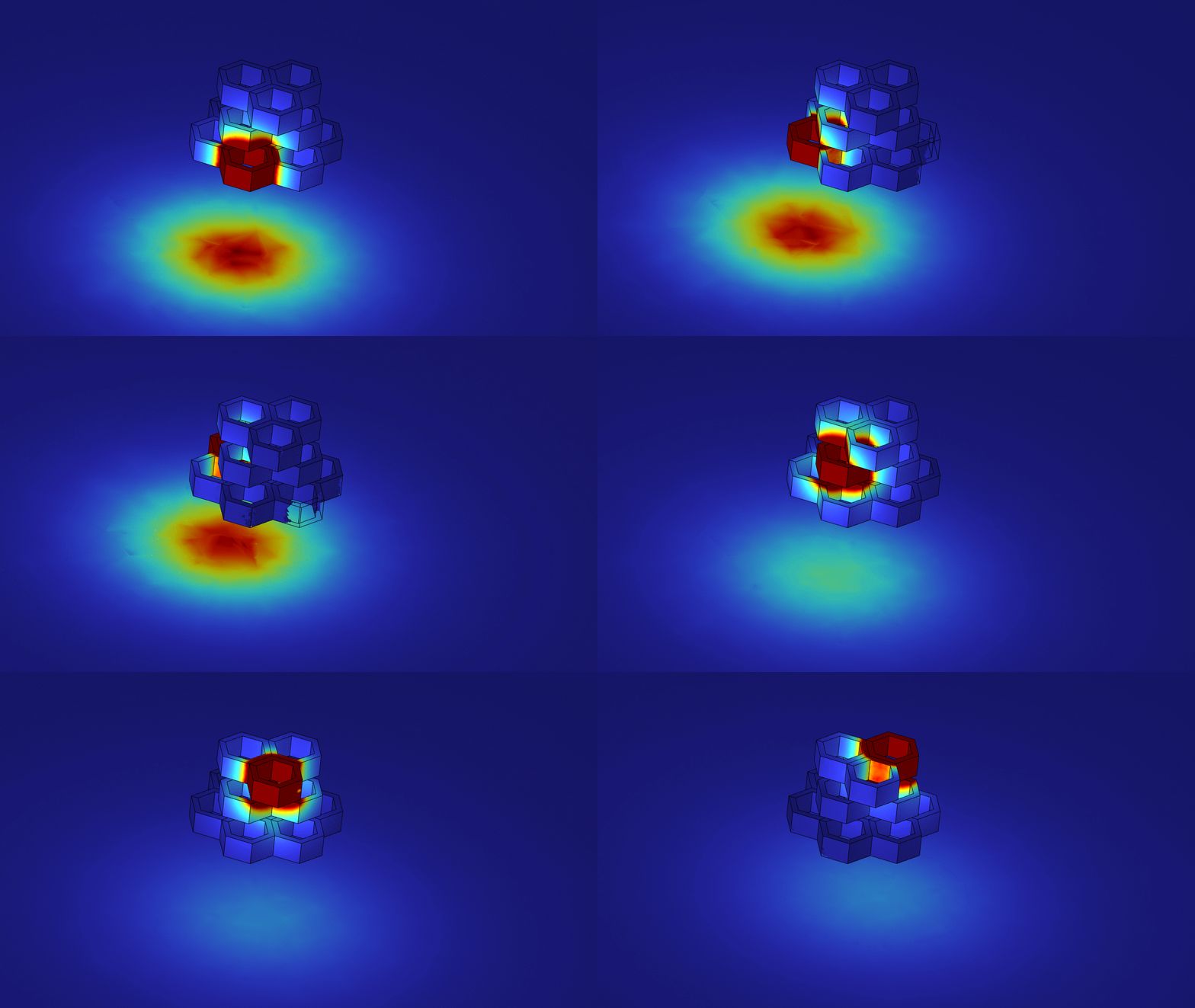
Sum of two single-coil sims equals the two-coil sim - the simulation is internally consistent on X and Y.
Scoped & priced by 2 independent labs.
Restored hearing in patients with severe hearing impairment
The central challenge: precision at depth
The hardest problem in our approach is steering a magnetic field precisely enough to reach the cochlea - a target a few millimetres across, sitting 30–40 mm below the skull surface. Standard magnetic stimulation cannot do this.
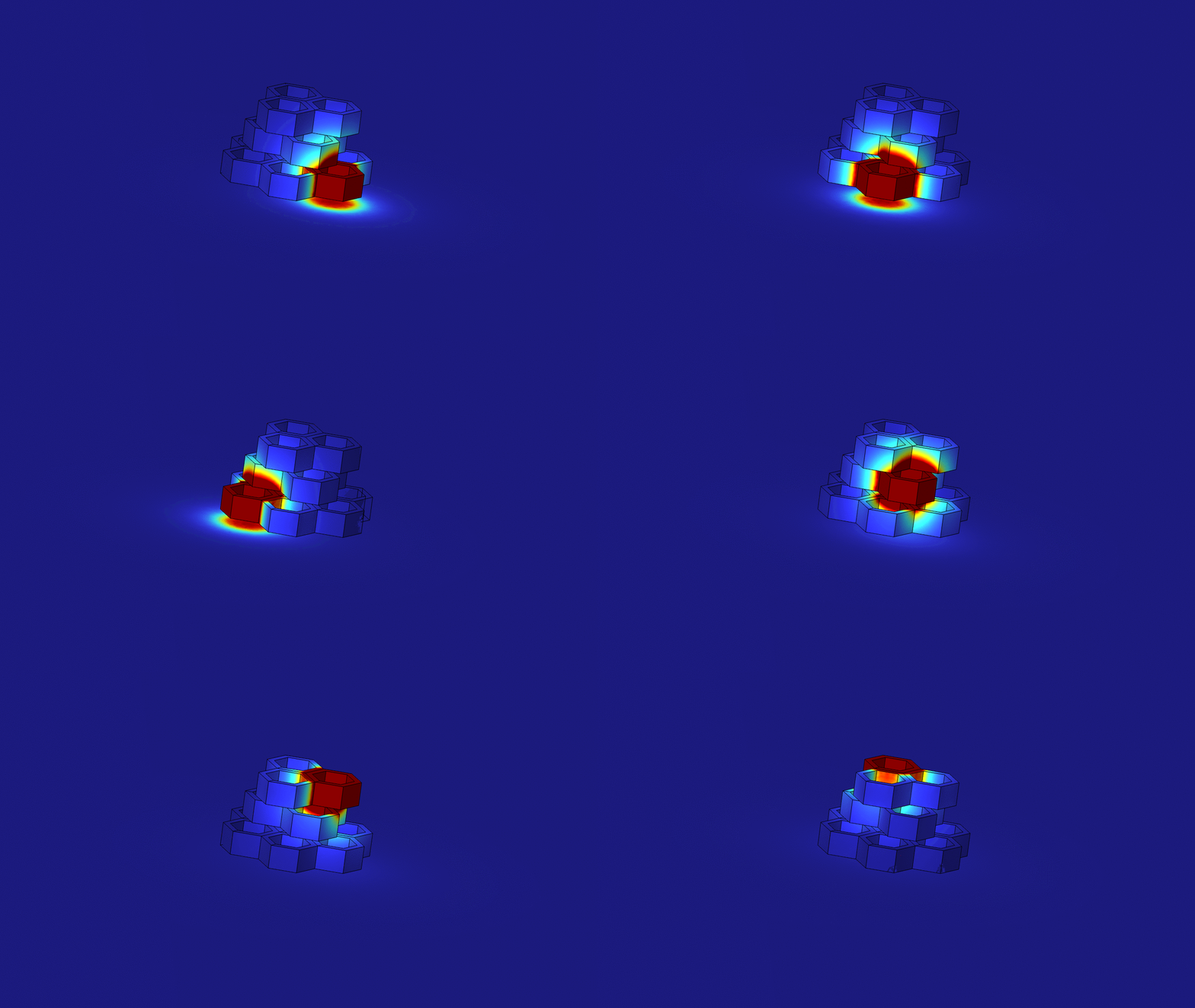
Simulation: the field heats one side of the array, not the other — an indication of directional steering on the X and Y axes, in simulation.
Caveat: the superposition check can only falsify the simulation, never confirm it — a matching sum proves internal consistency, not physical truth. And the simulation resolves the hot-spot only in the plane below the array, not above. Both await physical measurement.
The physical array must produce a controllable, focused magnetic field in the 10–50 mT range at the target region - derived from existing scientific literature on magnetic neural stimulation. The specific supra-threshold for auditory neural activation will be determined experimentally in the in vivo studies.
Before any animal study we must define the field required to stimulate — its time signal and its vector — and prove we can build and control that field independently at several positions in the cochlea.
A repeatable loop from hypothesis to bench
Simulation paired with a physical model, supported by the engineering depth at Sound Hub Denmark - so each hypothesis becomes a bench experiment in weeks.
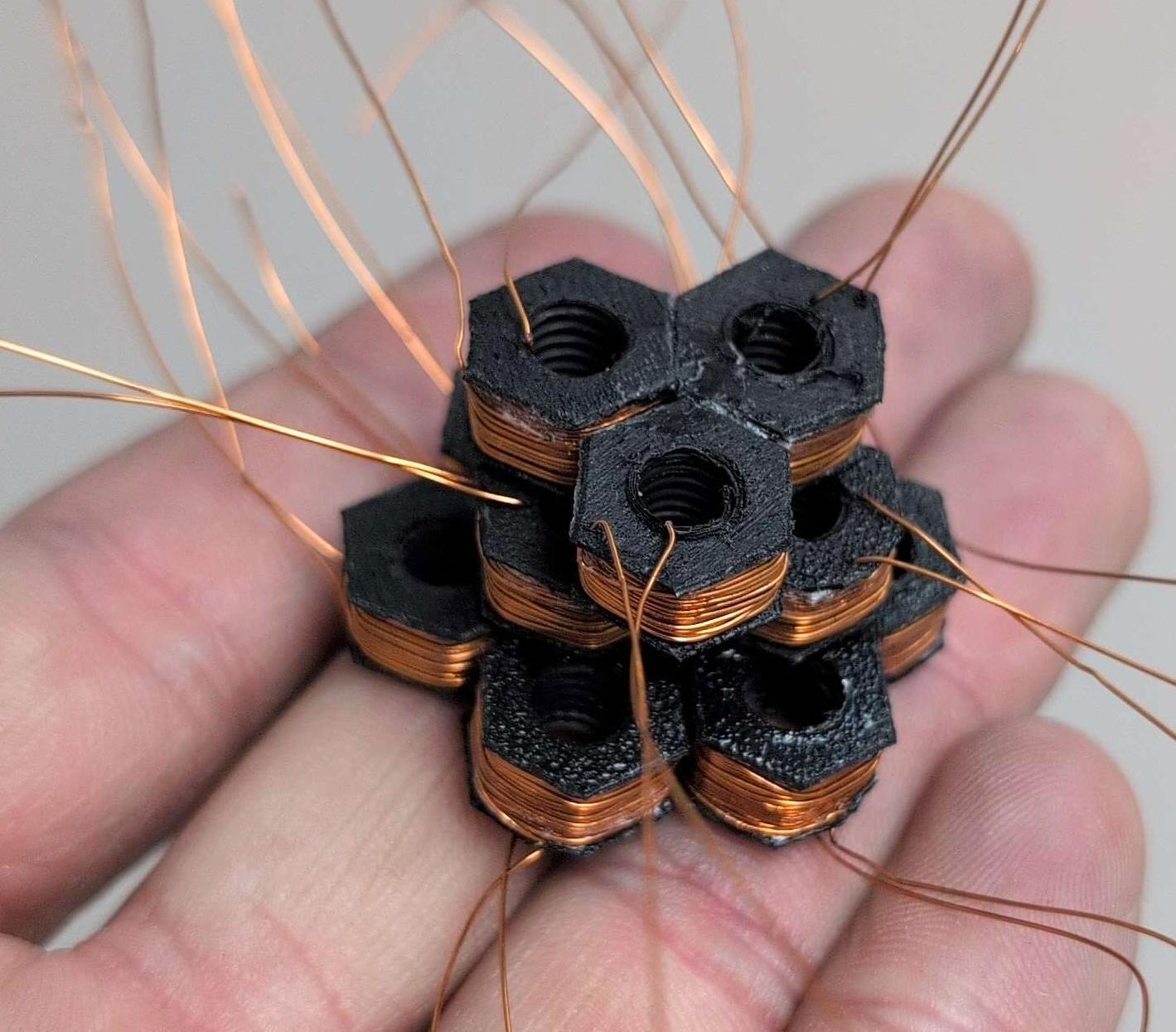
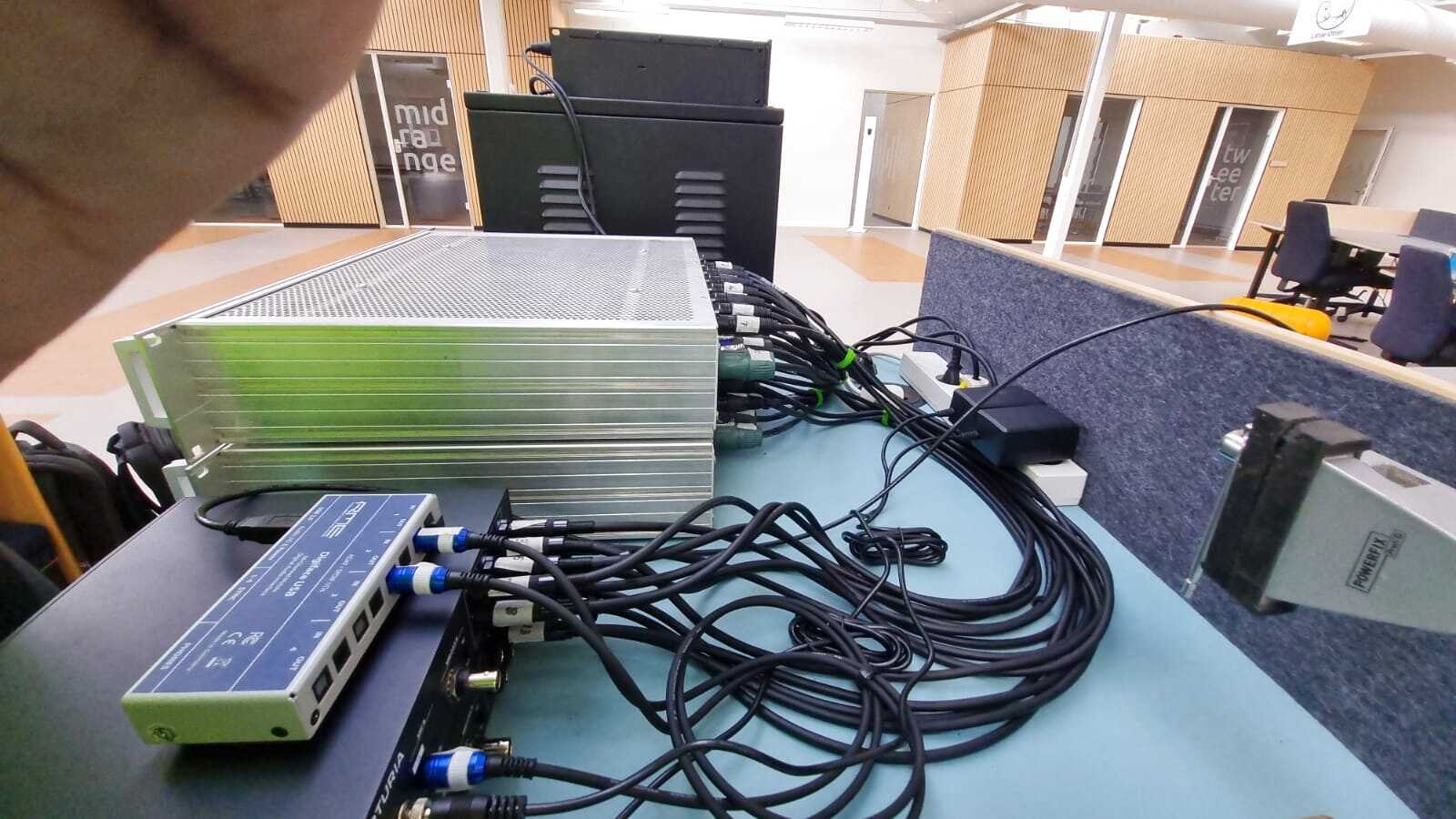
Cycle time: Math calculation → simulation → physical model in 4 to 6 weeks. This is the operating cadence that lets us test each hypothesis as a built artifact, not as a paper exercise.
We take our work to the people who can challenge it
We don't develop in isolation. Our direction and limiting-factor arguments are stress-tested where the relevant experts gather.
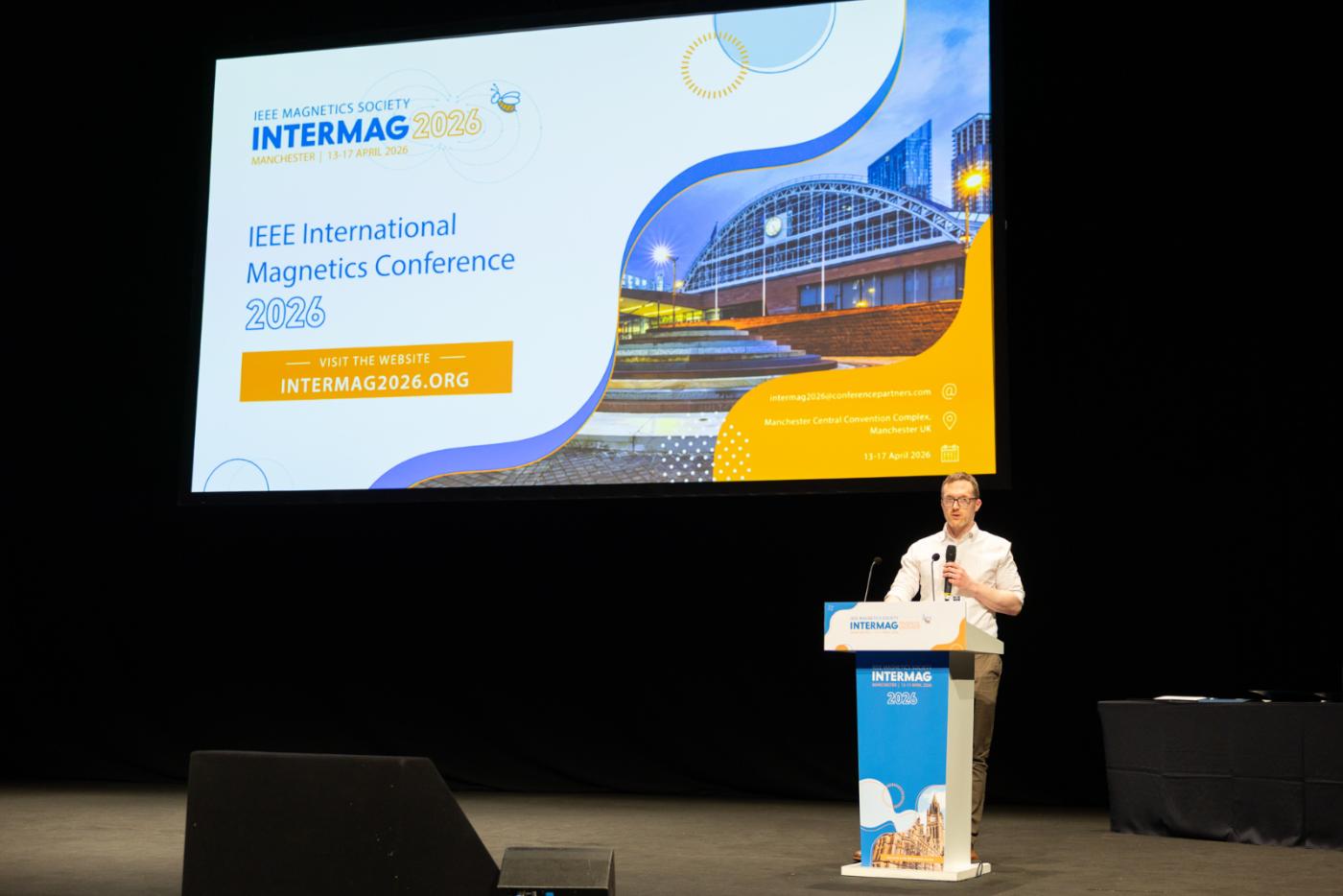

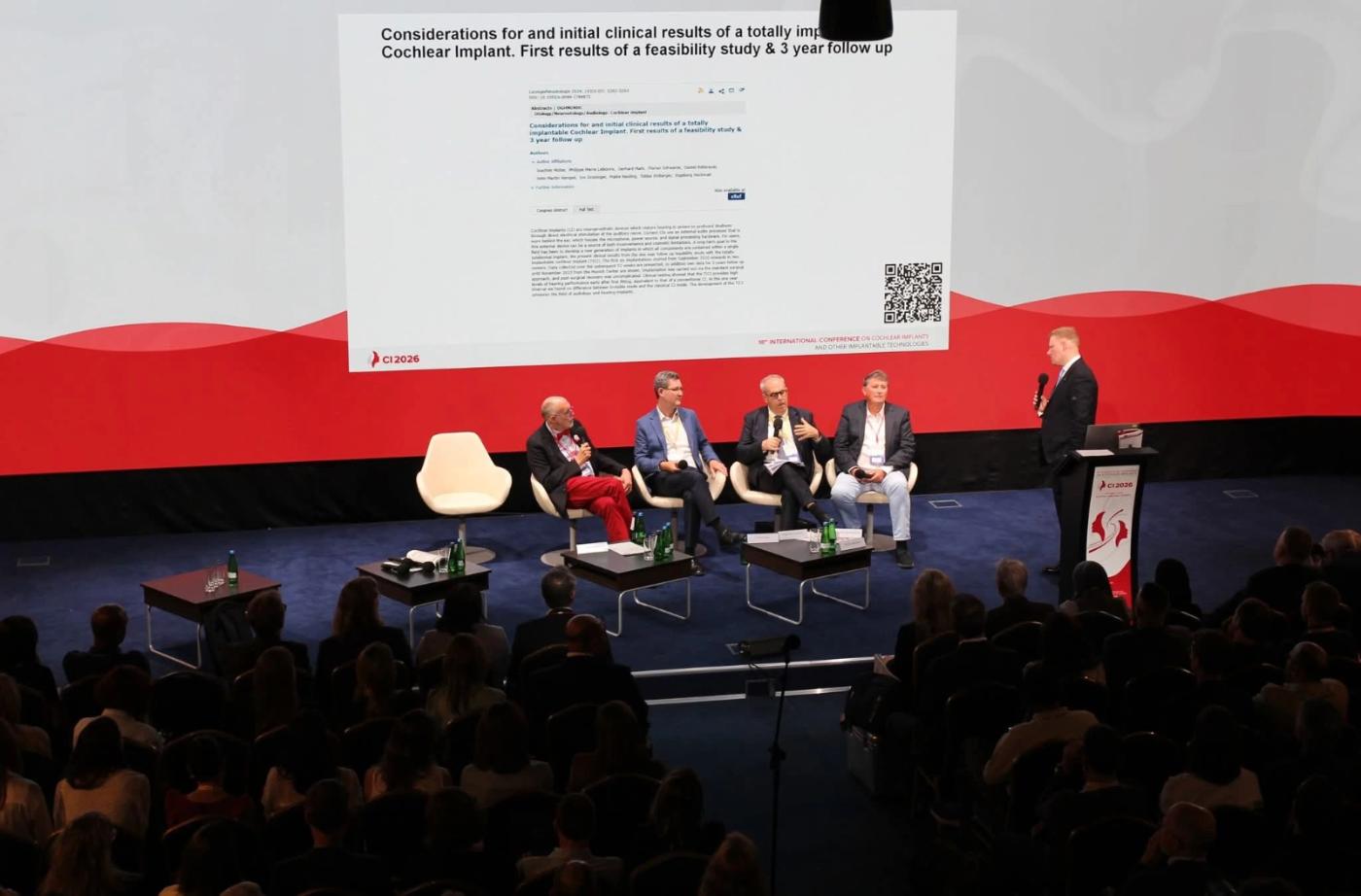

Why it matters: publishing and debating gives us feedback on how we think - not just on our results.
One study scoped & priced; a second lab in discussion
Our core hypothesis - stimulating the auditory pathway non-invasively with magnetic fields - is moving from computer simulation toward small-animal testing - the first test that can confirm, or reject, the physics in living tissue.
(Mouse)
Engaged on the in-vivo validation approach — a second, independent way to test the physics in living tissue & small animal subjects
Two prerequisites gate the first animal study: knowing the exact field that drives neural activation — its time signal and vector — and controlling that field independently at multiple positions along the cochlea.
The prediction engine, and the runway to build it
PREDICTION ENGINE
In discussion to formalise a research partnership with DTU - Technical University of Denmark (Dept of Energy Conversion & Storage; Structural Analysis & Modelling).
Goal: an electromagnetic simulation framework designed to predict each design before we build it - fewer build-and-see cycles.
APPROVED R&D BASE
Two years approved to run R&D from Denmark. Business plan reviewed and approved by the Startup Denmark program - the legal and operational base to do the science where the ecosystem for our research already exists. It is an operating approval, not capital.
Net progress this quarter: DTU partnership in discussion; two-year Denmark R&D operating approval granted.
We name the risks we have
The risks that would invalidate or constrain the work
The core risk is achieving focused, deep, and controllable magnetic activation at the cochlea - at the supra-threshold required for neural firing - using our array-matrix architecture. If the array cannot simultaneously deliver depth, focality, and supra-threshold field strength, the architecture is invalidated and the design space must be reopened.
Existing capital faces three converging pressures:
(a) The physics milestone requires a full-time senior scientist in electromagnetic physics to model experiments and generate validation results. The current after-hours association is limiting factor for the next stage.
(b) Operating from Denmark expands living and operational expenses versus the Indian cost base.
(c) Existing capital does not cover two full animal-study cycles at the Pittsburgh scoping (~$120K per study).
Make the steerable field real -Test and measure its physical model
Show the physical array matches the simulation — the bridge from math to Physics model
A physical model capable of a steered, focused field — Measured and tested
“Progress is measured by getting closer to the one thing that turns our physics into clinical proof.”